


Views: 0 Author: Site Editor Publish Time: 2026-08-10 Origin: Site


Post-shower mirror fog is a universal annoyance everyone experiences. Temporary lifehacks like applying shaving cream or soap often leave messy streaks on the glass. They also require constant reapplication to stay somewhat effective. For homeowners, designers, and contractors looking for a permanent, architectural-grade fix, a dedicated mirror defogger film is the standard. It gently warms the glass to eliminate moisture instantly. This seamlessly upgrades a standard vanity into a functional luxury.
However, mixing electricity, water, and glass requires strict adherence to safety and sizing standards. You cannot cut corners when planning electrical upgrades near showers. You must follow sizing guidelines closely to prevent structural failures. This guide breaks down exactly how to evaluate, size, and select the right heating film for your specific bathroom setup. We will explore voltage requirements, installation methods, and crucial safety ratings.
A high-quality mirror defogger film provides a permanent, zero-maintenance solution by gently heating the glass above the dew point.
Never size the film to the exact edge of the mirror; always leave a 1-to-2-inch margin for mounting and structural integrity.
Prioritize products with distinct safety certifications (UL, ETL, CE) and proper IP waterproof ratings (IP44 or higher) designed for damp environments.
Decide early between low-voltage (12V/24V) systems that require a transformer, and line-voltage (120V) systems that hardwire directly to standard circuits.
Homeowners often turn to internet forums for quick fixes. Social media heavily promotes DIY methods like smearing shaving cream or dish soap on the glass. You might also see recommendations for automotive anti-fog sprays. These temporary hacks inherently fail in residential bathrooms.
Chemical sprays and soaps leave a visible residue behind. You must wipe the glass repeatedly to remove streaks. This defeats the purpose of a clean mirror. Furthermore, humidity washes these temporary coatings away quickly. They offer very limited efficacy over time. You end up applying them weekly.
Modern engineering offers a much better approach. You must understand the basic physics of bathroom condensation. Warm, moist shower air collides against cold glass. The moisture rapidly drops out of the air. It condenses into tiny water droplets on the surface.
An ultra-thin PET (Polyethylene Terephthalate) heating pad interrupts this physical process. Manufacturers embed tightly woven carbon wires inside this durable polymer film. You adhere the pad directly to the back of the glass. When activated, it raises the surface temperature slightly. The glass typically becomes 10 to 15 degrees Celsius warmer than the ambient room temperature. Condensation simply cannot form on warm glass.
This automated approach positions the film as a permanent, invisible fog free mirror solution. You wire it directly to your bathroom lighting circuit. It turns on automatically when you enter. It demands zero daily maintenance. It leaves no chemical residue behind.
Choosing an effective anti fog mirror heater requires technical diligence. Safety remains paramount in wet environments. You must evaluate waterproofing, voltage specifications, and material quality carefully.
Bathroom environments produce heavy moisture daily. The heating pad must withstand constant steam exposure. You should always check the IP (Ingress Protection) rating before buying.
An IP44 rating offers basic splash resistance. This serves as the minimum baseline for bathroom zones. However, an IP54 or IP65 rating provides superior protection against moisture ingress. We strongly recommend higher IP ratings for heavy-use primary bathrooms.
Compliance verification matters immensely. You must look for rigorous third-party testing credentials. Look for recognized UL (Underwriters Laboratories), ETL, or CE marks. These agencies test for thermal runaways and electrical shorts. Avoid uncertified, white-label products entirely. They carry severe fire risks. They often lack automatic thermal safety shutoffs.
You must choose a voltage system early in your project. Electricians usually dictate this choice based on your existing wiring.
Line Voltage (120V/220V) systems wire simply. Professionals often prefer them for straightforward remodels. You connect them directly into an existing light switch circuit. They require no bulky external hardware.
Low Voltage (12V/24V) systems offer enhanced safety for extremely wet zones. However, they complicate the installation slightly. They require a step-down transformer. You must hide this transformer within the wall cavity or inside the vanity cabinet. It must remain accessible for future maintenance.
System Voltage Comparison Table
Feature | Line Voltage (120V/220V) | Low Voltage (12V/24V) |
|---|---|---|
Installation Complexity | Direct hardwire; faster to install | Requires external transformer placement |
Component Footprint | Minimal (wiring only) | Moderate (transformer requires space) |
Wet Zone Safety | High (Requires GFCI breaker) | Maximum (Inherently safer voltage) |
The physical construction dictates longevity. The backing must use commercial-grade acrylic adhesives. Cheap glue degrades quickly under stress. High humidity destroys weak bonds. Thermal cycling also causes cheap films to peel away from the glass.
Heat distribution also separates premium products from budget options. Quality films utilize self-regulating technology. They feature tightly spaced copper or carbon traces. This uniform spacing prevents localized hot spots. Extreme hot spots can easily crack expensive glass fixtures.
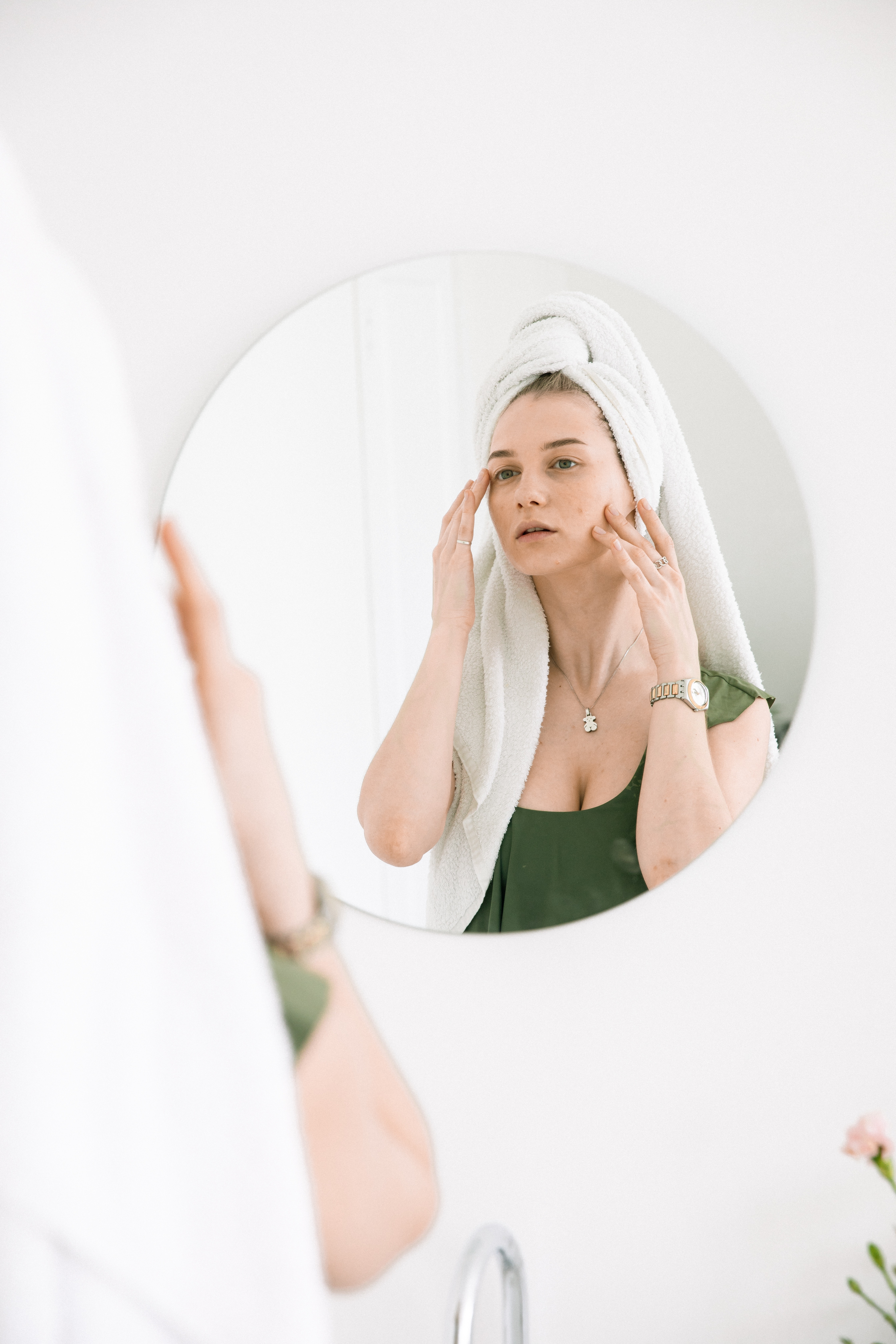
Finding the correct bathroom mirror heater dimensions requires precise measurements. You cannot simply cover the entire back surface. Strategic sizing prevents structural failures and saves energy.
The Margin Rule:
The heating pad must never cover 100% of the glass. You must leave a minimum 1-to-2-inch unheated border around the perimeter. This empty margin serves several crucial purposes.
It allows space for mechanical mounting brackets.
It leaves bare glass for structural mirror mastic to grip properly.
It prevents interference between decorative framing and the wiring housing.
If you apply structural adhesive directly over the PET film, the mirror may fall. The adhesive will grip the plastic pad instead of the solid glass.
Coverage Zones:
Focus entirely on your primary line of sight. The goal is to clear the space reflecting your face and torso. Do not worry about extreme corners. The outer edges naturally stay slightly cooler. A centrally placed pad provides ample visibility for shaving or makeup application.
Handling Double Vanities:
Many primary bathrooms feature double sinks. You face a logistical choice here. You can use two smaller, separately wired pads. You center one pad directly over each sink. Alternatively, you can install one massive pad spanning the entire width.
We recommend using two smaller pads. They significantly lower your overall electrical load. They cost less to purchase. They also target the heat exactly where you stand.
Step-by-Step Sizing Chart Method
Measure the total width and height of your glass pane.
Subtract 4 inches from the total width (creates a 2-inch border on each side).
Subtract 4 inches from the total height (creates a 2-inch border top and bottom).
Identify your primary viewing rectangle (shoulder width to top of head).
Select the closest standard pad size fitting within these calculated boundaries.
Homeowners must choose an implementation path. You can either upgrade an existing fixture or purchase a completely new integrated unit. Each path carries distinct logistical challenges.
This process involves applying a heating pad to an existing mirror. Contractors frequently perform this during minor bathroom updates.
Pros:
It remains highly cost-effective compared to buying new fixtures.
You can preserve custom, antique, or heavily stylized frames.
It allows you to customize the exact placement of the heated zone.
Cons:
It requires intensive manual labor.
You must safely remove the existing mirror from the wall.
Drywall work is often necessary to hide the new electrical wiring.
You risk shattering the glass during the removal process.
You can purchase a modern LED mirror featuring a factory-installed defogger. The manufacturer handles the internal wiring beforehand.
Pros:
It guarantees perfect component compatibility.
It features simplified single-whip wiring for the electrician.
A single manufacturer warranty covers the lights, glass, and heater together.
Cons:
It carries a significantly higher upfront purchase price.
You are limited strictly to available factory styles and dimensions.
Replacing a failed heating element often requires replacing the entire unit.
You must respect electrical codes strictly. Improper wiring in damp environments creates immediate hazards. Always consult local regulations before beginning your project.
Wiring to a Relay or Switch:
Defoggers should never be left on 24/7. Continuous operation degrades the acrylic adhesive over time. It can also cause stress fractures in the glass due to constant thermal expansion. Best practice dictates wiring the pad in parallel with another fixture. Connect it to the vanity light or exhaust fan. This ensures it activates automatically when needed. It shuts off reliably when you leave the room.
GFCI Protection:
Any electrical appliance in a bathroom must utilize protected circuits. You must place the heating pad on a Ground Fault Circuit Interrupter (GFCI) breaker or outlet. This represents a non-negotiable safety standard. A GFCI instantly cuts power if a moisture-induced short occurs. It protects you from serious injury.
Application Risks:
Applying the film manually demands a flawlessly clean glass surface. Dust, finger oils, or old glue residues weaken the bond. You must wipe the back of the mirror with isopropyl alcohol. Let it dry completely.
During application, you must press out all air bubbles. Use a rubber squeegee for smooth results. Trapped debris or air pockets insulate the pad from the glass. This causes localized overheating. Localized overheating eventually leads to delamination and product failure.
Upgrading your bathroom with a permanent defogging system requires careful planning. We recommend following a strict decision matrix. First, measure the visual sweet spot of your glass. Next, subtract at least two inches from all edges for your structural border. Then, choose the system voltage based on your electrician's specific recommendation. Finally, always verify UL and IP ratings to guarantee wet-zone safety.
We strongly encourage buyers to consult a licensed electrician before finalizing any purchase. They can verify your existing circuit capacity. They will ensure your chosen voltage matches the home infrastructure. Proper planning prevents expensive mid-project corrections. It ensures you enjoy a perfectly clear reflection after every shower.
A: No. Cutting the film severs the internal electrical circuit. This renders the pad completely useless. It also exposes live carbon wires, creating a severe fire hazard. You must always buy the closest smaller size that fits your custom shape.
A: No. They typically draw very low wattage. A standard residential pad often uses the equivalent energy of a 60W lightbulb or less, depending on its physical size. They only draw power actively when your bathroom lights or fan are turned on.
A: No. The heating film must be applied directly to the back of the glass. Glued mirrors must be safely removed first. Removing mirrors attached with mastic is often extremely difficult and frequently results in breaking the glass.


